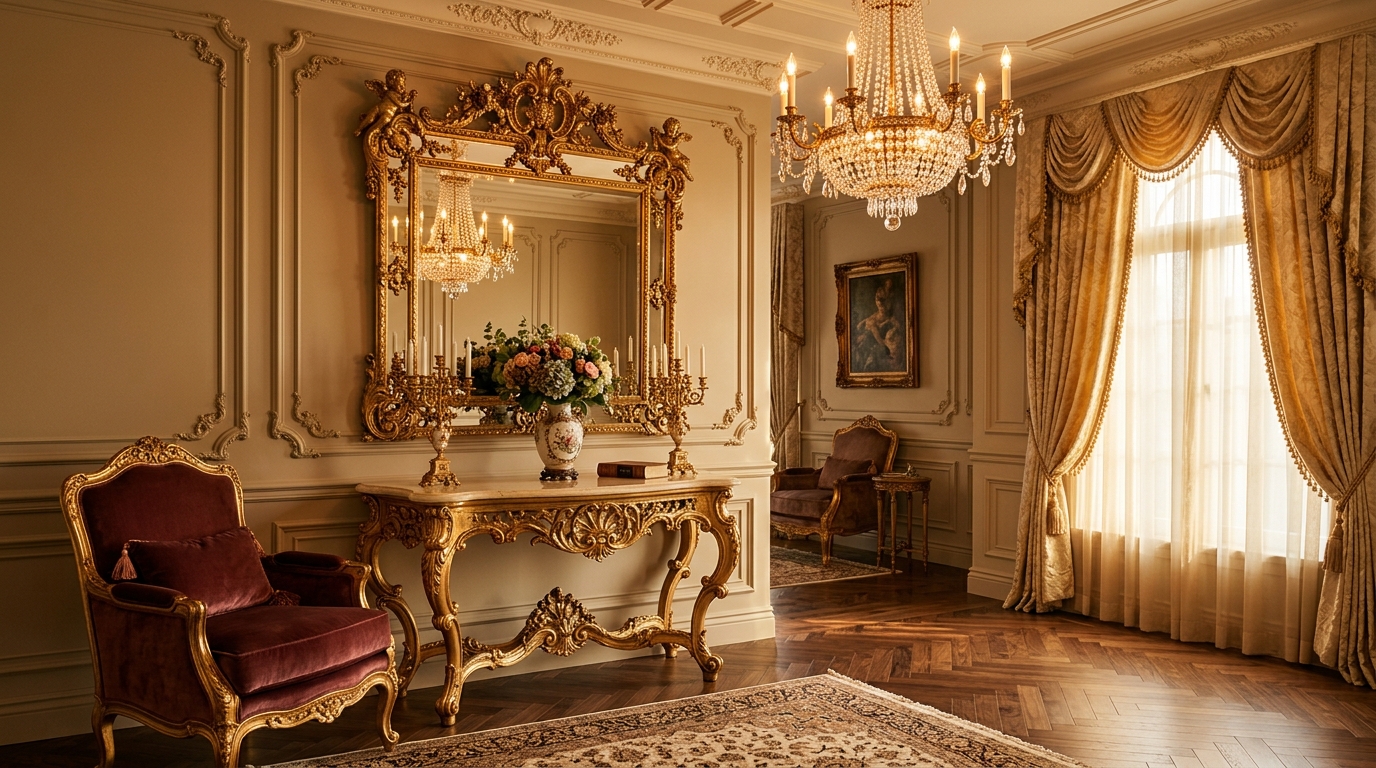
There’s a quiet revolution happening in American luxury interiors. Walk into a newly renovated estate in Greenwich, a penthouse on Fifth Avenue, or a coastal compound in Malibu, and you’re increasingly likely to find an ornate Italian credenza, a hand-carved French armoire, or a gilded Viennese console commanding the room. Affluent Americans aren’t just admiring European Baroque furniture from afar anymore—they’re actively importing it. Here’s why this trend is accelerating, and more importantly, how you can navigate the process with confidence.
The Return of Maximalism and Craft Heritage
After years of minimalist dominance, interior design has swung decisively toward maximalism, richness, and storytelling. Baroque furniture—characterized by dramatic curves, intricate marquetry, gold leaf accents, and hand-carved details—offers exactly what mass-produced contemporary pieces cannot: soul, provenance, and unmistakable presence.

European artisans, particularly in Italy, France, and Germany, have preserved centuries-old woodworking traditions that simply don’t exist at scale in the United States. When you buy baroque furniture in the USA, you’re often choosing between reproductions made overseas or limited local offerings. Discerning buyers are increasingly bypassing the middleman entirely, sourcing directly from European manufacturers and antique dealers who understand the craft lineage.
The appeal isn’t purely aesthetic. For high-net-worth individuals, European Baroque pieces represent tangible assets—furniture that appreciates in value, carries historical significance, and becomes a family heirloom rather than a disposable trend item.
Why Import Directly Instead of Buying Domestic?
The most practical reason affluent buyers import European furniture to the USA is access. The European market offers vastly broader selection, from authenticated 17th- and 18th-century antiques to masterfully crafted reproductions by ateliers that have operated for generations. American retailers who stock European pieces typically apply significant markups—often 100-300% above European wholesale prices—to cover their own import costs, warehousing, and profit margins.
By importing directly, buyers gain:
- Authenticity assurance: Direct relationships with makers or verified antique dealers
- Customization: Many European workshops still accept bespoke commissions
- Cost efficiency: Even after shipping and duties, total investment often undercuts domestic retail
- Exclusivity: Pieces that simply aren’t available through American channels
Casa Padrino: A Trusted Gateway to European Luxury Furniture
For American buyers seeking a reliable entry point into the European market, Casa Padrino has established itself as a premier destination. Based in Germany and operating through casa-padrino.de, the company specializes in high-end Baroque, Rococo, and luxury furniture sourced directly from European manufacturers.

What distinguishes Casa Padrino in the competitive landscape is their end-to-end service model. Unlike platforms that simply broker sales, Casa Padrino manages the entire journey—from curation and quality verification to professional packing and international logistics coordination. For Americans looking to buy baroque furniture in the USA without the typical sourcing headaches, this integrated approach eliminates much of the uncertainty that deters first-time importers.
Their catalog spans authentic reproductions crafted using traditional techniques: hand-carved solid wood frames, genuine gold leaf gilding, and period-accurate upholstery. Each piece undergoes rigorous quality inspection before export, ensuring that what arrives at your door matches the craftsmanship standards promised.
Understanding the Logistics: A Practical Framework
Luxury furniture shipping from Europe to the United States is more straightforward than most buyers assume, but it requires methodical planning. Here’s what you need to know.
Shipping Methods and Costs
For furniture, ocean freight is the standard approach. Options include:
- Full Container Load (FCL): A 20-foot or 40-foot container dedicated to your shipment. Ideal for furnishing an entire home or importing multiple pieces. Costs typically range from $4,000–$7,000 for a 20-foot container from Europe to the East Coast.
- Less Than Container Load (LCL): Your furniture shares container space with other cargo. Perfect for single statement pieces or small collections. Expect $1,200–$3,000 for approximately 5 cubic meters, with transit times of 20–40 days.
- Air Freight: Viable only for smaller, extremely high-value pieces where speed matters. Costs run significantly higher but delivery occurs within 3–10 days.
When you import European furniture to the USA, always budget an additional 20–30% above base shipping rates for port fees, fuel surcharges, and insurance.
Professional Packing Is Non-Negotiable
Baroque furniture—often featuring delicate gilt surfaces, inlay work, and carved extremities—demands export-grade packing. Professional crating with custom-built wooden frames, foam cushioning, and moisture barriers reduces damage claims by approximately 70%. Reputable European sellers or specialized freight forwarders coordinate this as part of their service.

Casa Padrino handles export-grade packing as standard practice, using custom-built wooden crates and protective materials designed specifically for ornate, high-value furniture. This eliminates a common pain point for American buyers who might otherwise struggle to find qualified packers in Europe.
Customs, Duties, and Documentation
U.S. Customs and Border Protection applies duties on imported furniture based on Harmonized System (HS) codes—typically 9401 for seating and 9403 for other wooden furniture. Duty rates vary by material and origin but generally fall between 0% and 6.5% for European-made goods, plus applicable Merchandise Processing Fees.
Required documentation includes:
- Commercial invoice with accurate valuation
- Packing list detailing contents
- Bill of lading
- Certificate of origin
For antique furniture (100+ years old), you may qualify for reduced or exempted duties under specific tariff classifications, though you’ll need authenticated provenance documentation.
Experienced exporters like Casa Padrino provide complete documentation packages, ensuring smooth customs clearance and reducing the risk of delays or unexpected fees at U.S. ports.
Quality Expectations: What to Inspect Before Committing
European craftsmanship standards differ meaningfully from mass-market American furniture. When evaluating pieces remotely:
Construction: Traditional Baroque furniture uses solid hardwood frames (walnut, mahogany, oak), dovetail joints, and hand-applied finishes. Request detailed photographs of joinery, drawer construction, and underside surfaces.
Materials: Authentic gilding uses genuine gold leaf, not metallic paint. Marquetry should feature natural veneers, not printed laminates. Upholstery on period pieces typically uses horsehair stuffing and natural fabrics.
Condition: For antiques, expect honest wear consistent with age. Reputable European dealers disclose restoration history transparently.
Scale: European proportions often differ from American standards. Verify dimensions carefully, particularly for beds, dining tables, and seating.
Casa Padrino addresses these concerns by providing detailed product specifications, high-resolution imagery, and direct consultation for American buyers. Their team understands the questions U.S. clients typically have about European sizing, materials, and construction methods.
Working With Trusted Sources
The most successful importers build relationships with established European dealers, auction houses, or specialized manufacturers rather than relying on anonymous online marketplaces. Look for sellers who:
- Provide detailed condition reports and high-resolution photography
- Offer secure payment escrow or letter-of-credit arrangements
- Coordinate professional packing and freight forwarding
- Supply complete export documentation
For buyers seeking curated access to European Baroque and luxury furniture, casa-padrino.de offers direct sourcing from European manufacturers with deep experience navigating international logistics. Their established track record in luxury furniture shipping to North America streamlines the process from selection through delivery, making them a practical choice for Americans who want European quality without the typical import complexity.
Final Thoughts
Importing European Baroque furniture isn’t merely a transaction; it’s an investment in permanence in an increasingly disposable world. The combination of superior craftsmanship, historical resonance, and potential financial appreciation makes the logistical effort worthwhile for serious collectors and design-conscious homeowners.
With proper planning, realistic budgeting for luxury furniture shipping, and attention to customs requirements, the process becomes entirely manageable. Whether you source through established European platforms like Casa Padrino or build direct relationships with individual makers, the reward—a home furnished with pieces that carry genuine heritage and unmatched artistry—is something no showroom in America can replicate.
