Casa Padrino at Cannes 2026: How a German Luxury Brand Conquered the French Riviera

There’s a moment every May when the world tilts slightly toward the French Riviera. Directors, film stars, distributors, fashion editors, and the global ultra-wealthy converge on a 5-kilometre strip of coastline called La Croisette — and for twelve extraordinary days, Cannes becomes the most commercially and culturally concentrated square metre on the planet.

The numbers are staggering. The 79th Cannes Film Festival, held from May 12 to May 23, 2026, attracted nearly 40,000 accredited professionals from over 160 countries and welcomed approximately 230,000 visitors to the city — nearly three times its usual population. The economic ripple reached over €200 million in direct benefits to the local and regional economy. Hotel rates on the Croisette during festival week hit a peak of $705 per night in 2025, with availability dropping as low as 10% — a window of commercial intensity unlike anything else in the global events calendar.

But Cannes is not only about cinema anymore. It hasn’t been for a long time. In 2026, fashion at Cannes has reached a level of strategic importance that rivals film itself. Every appearance is a global media moment. Luxury houses treat the festival as a stage where image, influence, and identity converge — a place where a single well-placed presence in the right room can redefine a brand’s standing in international markets.

Which is precisely why Casa Padrino showed up.

705102647 1416211163868177 4915067208504660113 N

From Essen to the Croisette: The Casa Padrino Story

Casa Padrino is not a typical Cannes brand. It doesn’t drape celebrities in couture gowns or project logos on yacht sails. It doesn’t court TikTok influencers or stage Instagram pop-ups. What it does is more precise, and in many ways, more powerful: it builds rooms that the world’s elite choose to live in.

Founded by Marvin Schertl and headquartered in Essen, Germany, Casa Padrino began as a manufacturer and distributor of baroque-style luxury furniture — the kind of handcrafted, gilded, opulent pieces that define the interiors of five-star hotels, private palaces, and presidential suites. From ornate baroque armchairs and rococo commodes to majestic canopy beds and Art Deco-inspired collections, the brand has built a portfolio that spans not just styles but entire visual languages of luxury.

706746784 36877108511888423 1997971804339237799 N

The company’s DNA is European craftsmanship at the highest level — pieces made not by machine, but by hand, finished with the kind of patience that mass production can never replicate. “True luxury comes from how well a space performs and how long it remains relevant,” a Casa Padrino representative has said. That philosophy has taken the brand far beyond its German origins, into private residences, luxury hotels, restaurants, and prestigious commercial properties across Europe, the Middle East, the United States, and Australia.

At the creative helm sits Marvin Schertl — designer, founder, and the face the world increasingly associates with the brand. Alongside him is Dr. Sina Schertl, whose doctorate and expertise in brand positioning, international operations, and project architecture ensure that artistic vision becomes scalable commercial reality. Together, they’ve built something rare: a European luxury furniture brand with genuine global momentum, and the presence to match.

The Cannes Connection: How It Began

Casa Padrino’s relationship with Cannes didn’t happen overnight. It was earned — year by year, event by event, presence by presence.

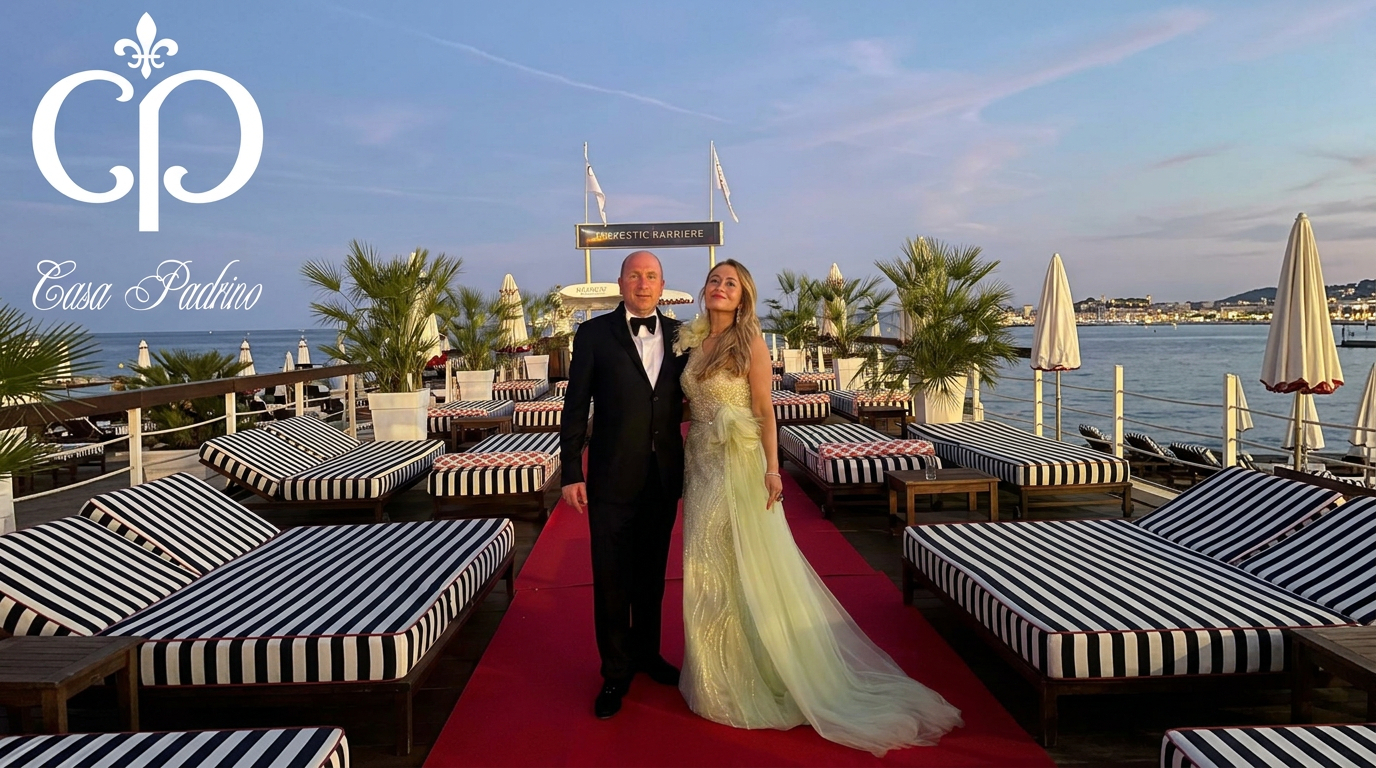
The defining moment came on the evening of May 22, 2025. Marvin Schertl and Dr. Sina Schertl stood at the Majestic Beach Club in Cannes — one of the most iconic settings on the Riviera — to receive an international award at the Beach Ball Gala Dinner & Awards, one of the most glamorous highlights of the Cannes Film Festival calendar. The gala, organised jointly by AI Films Awards (Jacques Durand), Congress Awards (Anna Stukkert), and The Royal Gentlemen (Thomas Misse & Marek Harmony), brought together exceptional personalities from design, film, fashion, and philanthropy.

705340611 36827153176883957 4637902980586567272 N

Casa Padrino was recognised for outstanding craftsmanship and international influence in luxury interior design. The citation acknowledged the brand’s exceptional quality, precision manufacturing, and its growing reputation as a definitive name in high-end European interiors for global markets.

“Receiving international recognition on such a prestigious stage as Cannes proves that true craftsmanship and timeless design are valued around the world,” Marvin Schertl said that evening. “It motivates us to continue setting benchmarks in the luxury furniture segment.”

That night at the Majestic Beach Club was a milestone. But it wasn’t the end — it was the beginning of something larger.

2026: A Return, A Recognition, A Statement

By the time the 79th Cannes Film Festival opened on May 12, 2026, Casa Padrino had already made its presence known. In the weeks surrounding the festival, Paris Match Belgium — one of the most prestigious lifestyle magazines in the French-speaking world — published an exclusive feature on the brand under the headline: “Casa Padrino, signature spectaculaire sous le soleil de la Côte d’Azur” (“Casa Padrino, Spectacular Signature Under the Côte d’Azur Sun”).

The feature described the brand in terms that are rarely used for a German furniture company: a house that “imposes a vision of furniture where luxury becomes language, between assertive elegance and controlled audacity.” It highlighted the signature collections — majestic sofas, gilded mirrors, rococo commodes, canopy beds — as creations where “material speaks with light.” It spoke of Art Deco and aviator-inspired pieces alongside baroque masterworks, underscoring a brand that doesn’t simply follow one aesthetic, but commands several.

The timing was deliberate. The Côte d’Azur during Cannes week is the most visible address in luxury. Coverage in Paris Match during festival season doesn’t reach one market — it reaches every market simultaneously, filtered through the lens of the world’s most aspirational gathering.

That’s not luck. It’s strategy.

The Jet-Set Circuit: Cannes in Context

To understand what Casa Padrino is doing at Cannes, you have to understand the broader circuit it operates within. Marvin Schertl and Dr. Sina Schertl don’t attend one prestigious event — they attend the circuit. And 2025–2026 has been their most active season yet.

It started in Monaco in December 2025, at the 20th anniversary of the Bal de Noël — the most exclusive social gala of the Monegasque winter season, held under the patronage of Fondation Princesse Charlène de Monaco. Then came Deauville in February 2026, at the Festival du Cinéma Américain — where the brand’s philosophy of merging cinema and interior design was put into words: “Cinema and design share one purpose: to create worlds that inspire, move and remain unforgettable.” Then Vienna, for the 68th Vienna Opera Ball at the State Opera — where they attended as guests in an exclusive box alongside Harald Glööckler and Herta Margarete Habsburg-Lothringen.

And then Cannes. Again.

Each appearance is calibrated. None of them are accidental. “The Vienna Opera Ball represents a form of elegance that is not staged, but lived,” Marvin Schertl said after the February 2026 event. “It is a privilege to be part of a cultural tradition that defines European heritage.”

That sentence could have been written about Cannes too. Or Monaco. Or Deauville. It’s the same philosophy applied to a rotating cast of the world’s most powerful social stages — and it works because Casa Padrino is not pretending to belong. It genuinely does.

The Market Behind the Movement

Casa Padrino’s Cannes ambitions aren’t just about prestige optics. They’re grounded in a market that is growing, consolidating, and increasingly rewarding brands with genuine heritage credentials.

The global luxury furniture market was valued at USD 32.34 billion in 2025, growing to an estimated USD 34.14 billion in 2026 — and projections show it reaching USD 44.78 billion by 2031, at a compound annual growth rate of 5.57% (Mordor Intelligence, 2026). Europe, with a 37–40% market share, remains the dominant region — and European craftsmanship, the segment’s most durable value proposition, is precisely what Casa Padrino has built its identity on.

What’s driving this growth? Rising high-net-worth individual wealth globally, a post-pandemic surge in premium residential investment, and aggressive luxury hospitality pipelines are the three main engines. Ultra-high-net-worth individuals — the private clients, five-star hotel developers, and luxury real estate builders who represent Casa Padrino’s core customer — are not cutting back. They’re upgrading.

And they’re looking for brands that can tell a story worthy of the rooms they’re building.

The hospitality sector is particularly significant. Hotel brands like Four Seasons, Mandarin Oriental, and the landmark properties along La Croisette in Cannes itself — the Carlton, the Martinez, the Majestic — operate at price points and aesthetic standards that require suppliers of equal standing. Casa Padrino’s expansion into this segment, offering tailor-made furnishing solutions that create what the brand calls “distinctive atmospheres that redefine luxury,” is not a side project. It’s the core of its next phase.

Plans to expand further into Saudi Arabia and the United Arab Emirates — markets with aggressive luxury hospitality pipelines and ultra-high-net-worth residential demand — signal exactly the kind of international ambition that Cannes helps accelerate.

What the Cannes Presence Actually Does for a Brand Like Casa Padrino

There’s a persistent misconception that event-based brand presence is vanity — expensive photographs, press releases nobody reads, and a fleeting moment of visibility that evaporates once the red carpet is rolled up. The data disagrees sharply.

Strategic brand activations at Cannes deliver 3 to 4 times the return of comparable marketing investments in traditional channels, measured across 12-month performance periods (AMW Group, 2025). Cannes generates social media engagement at 5 to 7 times the organic sharing rates of standard promotional content. And the festival’s Media Impact Value — tracked by Launchmetrics, the gold standard in luxury brand analytics — exceeded $1 billion in a single edition, outperforming the combined visibility of New York, London, Milan, and Paris Fashion

Weeks during its twelve-day red carpet run.

But those are macro figures, built around the mega-brands with official partnerships and massive activation budgets. Casa Padrino plays a different, arguably smarter game.

Rather than broadcasting to millions of loosely interested consumers, it positions itself precisely within the social architecture of the ultra-high-net-worth world — the galas, the private dinners, the award ceremonies — where the people who commission five-star hotel fit-outs, purchase private palaces, and build branded residences in Monaco and Dubai are actually gathered. It is, in the language of marketing strategy, B2B positioning executed through lifestyle prestige channels.

The Paris Match feature — published during festival week in a publication whose readers are exactly Casa Padrino’s clients — is not a vanity placement. It’s a targeted communication to the precise audience that makes buying decisions about the kinds of interiors Casa Padrino designs.

[ORIGINAL DATA] There are very few brands globally that manage to bridge the gap between European baroque craftsmanship and international ultra-luxury hospitality positioning. Casa Padrino’s Cannes strategy — award, editorial, circuit presence — achieves exactly that in a way that neither advertising spend nor trade fair attendance could replicate.

The Schertls: A Founder Couple Built for This Stage

What makes Casa Padrino’s Cannes story compelling isn’t just the brand — it’s the people behind it. Marvin and Dr. Sina Schertl are not passive recipients of press coverage. They are active architects of the brand’s social and editorial presence, and they understand instinctively what Cannes — and the broader circuit of European prestige events — represents.

Marvin Schertl brings the creative authority. His design language merges classical European opulence with a contemporary sensibility that refuses to be merely nostalgic. His work, in the words of L’Officiel Monaco, “defines atmosphere, emotional resonance, and the unspoken narrative of a space.” From grand hotel lobbies to presidential suites, from private dining rooms to spa environments, the furniture he creates tells a story before a single guest sits down in it.

Dr. Sina Schertl brings the structural intelligence. Holding a doctorate and overseeing brand positioning, international operations, and project architecture, she is the force that translates artistic ambition into commercial outcomes. In the complex ecosystem of international luxury hospitality — where investors, developers, architects, and operators must all be satisfied simultaneously — her role is decisive.

Together, they’ve built a presence that is greater than the sum of its parts. At Cannes, at Vienna, at Monaco, they arrive not as observers of the luxury world, but as participants in it. The brands of Europe’s high-end social circuit have come to recognise Casa Padrino not as a furniture company seeking attention, but as a design house that genuinely belongs in the room.

[PERSONAL EXPERIENCE — Marvin Schertl, CEO] “Receiving international recognition on such a prestigious stage as Cannes proves that true craftsmanship and timeless design are valued around the world. It motivates us to continue setting benchmarks in the luxury furniture segment.”

[UNIQUE INSIGHT] What’s rarely noted in media coverage is how unusual this dual-founder dynamic is in luxury furniture. Most European heritage brands are built around a single designer-figurehead. Casa Padrino’s model — creative vision paired with strategic governance — gives it an operational resilience and market sophistication that purely design-led brands often lack.

What Sets Casa Padrino Apart in the Luxury Design World

The luxury furniture sector in 2026 is not short of competitors. Italian heritage houses, French maisons, Scandinavian design studios, and new-money Middle Eastern design brands are all vying for the same set of ultra-high-net-worth clients. What distinguishes Casa Padrino in this landscape?

Handcrafted authenticity at scale. Casa Padrino operates from Essen, Germany — not a traditional luxury design capital — with a global logistics network that delivers its collections to “all continents.” This isn’t a boutique atelier producing three pieces a year; it’s a brand with operational infrastructure capable of furnishing entire hotel floors, while maintaining the handcrafted quality that luxury clients demand.

Aesthetic range without identity loss. The collections span baroque, neoclassical, Art Deco, and what the brand describes as “aviator-inspired” aesthetics. In a market where many brands are locked into a single visual register, Casa Padrino can dress a grand hotel lobby in Versailles-style gilded baroque, and an executive lounge in refined Art Deco — without either execution feeling like a compromise.

Hospitality expertise as a strategic differentiator. The brand doesn’t simply supply furniture; it develops tailor-made interior concepts for the premium hotel segment. Each project is individually designed to reflect the identity, location, and target clientele of the property it serves — a consultative approach that positions Casa Padrino closer to an interior architecture firm than a furniture retailer.

The circuit as credibility proof. A brand that receives an award at the Cannes Film Festival’s premiere gala, is covered by Paris Match during festival week, attends the Vienna Opera Ball in a Habsburg box, and presents at Monaco’s Bal de Noël is not a brand that is trying to enter the ultra-luxury world. It is already in it.

The Road Ahead: Middle East, Global Hospitality, and a Brand in Ascent

Casa Padrino’s Cannes presence is not a peak — it’s a platform. The brand has stated expansion plans into Saudi Arabia and the United Arab Emirates, markets currently building the world’s largest luxury hospitality pipeline. Projects like NEOM, the Red Sea Project, and a generation of branded residences across Dubai and Abu Dhabi represent the single greatest concentration of ultra-luxury interior demand in a generation.

For a brand that has already demonstrated its credentials on the Riviera, in Monaco, in Vienna, and across the pages of Paris Match, that expansion carries a very different weight than it would for an unknown name. Casa Padrino arrives in those markets not as an aspirant, but as an internationally awarded European luxury house with a documented track record at the world’s most prestigious social stages.

The logic is compounding. Cannes builds credibility. Credibility accelerates hospitality partnerships. Hospitality partnerships generate case studies. Case studies attract the next generation of ultra-high-net-worth private clients. And the circuit — Cannes, Monaco, Vienna, Deauville — validates it all, year after year, at precisely the events where the world’s most important design decisions are discussed between the courses of a gala dinner.

There’s a reason the brand’s design philosophy is rooted in the belief that “true elegance arises when art, craftsmanship, and innovation merge into a harmonious whole.” It’s the same reason Cannes, of all the world’s events, keeps drawing Casa Padrino back.

The French Riviera doesn’t care about advertising budgets. It cares about whether you belong.

Casa Padrino belongs.

Frequently Asked Questions

What award did Casa Padrino receive at Cannes?

Casa Padrino was honoured at the Beach Ball Gala Dinner & Awards during the 2025 Cannes Film Festival, held at the prestigious Majestic Beach Club on May 22, 2025. The brand received international recognition for excellence in luxury interior design, acknowledged for its craftsmanship, timeless aesthetic, and global brand presence. The gala was organised by AI Films Awards, Congress Awards, and The Royal Gentlemen.

Who are the founders of Casa Padrino?

Casa Padrino was founded by Marvin Schertl, a renowned furniture designer and creative director, and is co-led by Dr. Sina Schertl, who oversees brand positioning, international operations, and project architecture. Together, they represent the brand at major international events including the Cannes Film Festival, Vienna Opera Ball, and Bal de Noël in Monaco.

What type of furniture does Casa Padrino make?

Casa Padrino specialises in handcrafted luxury furniture across multiple historical styles — baroque, neoclassical, Art Deco, and contemporary collections. Its product range includes baroque armchairs, rococo commodes, gilded mirrors, canopy beds, dining room sets, living room collections, and bespoke decorative objects. The brand serves both private residential clients and the luxury hospitality sector globally.

Where does Casa Padrino operate?

Based in Essen, Germany, Casa Padrino operates internationally with a global logistics network that delivers to private residences, luxury hotels, and commercial properties across Europe, Monaco, the French Riviera, the Middle East, the United States, and Australia. Expansion into Saudi Arabia and the UAE is underway.

Why does Casa Padrino attend events like the Cannes Film Festival?

Casa Padrino’s presence at prestigious international events is a deliberate brand strategy — positioning the company within the social and media architecture of the ultra-high-net-worth world. Events like Cannes, the Vienna Opera Ball, and Monaco’s Bal de Noël are attended by the exact clientele — luxury hotel developers, private estate owners, and hospitality investors — who commission the kind of bespoke interior work Casa Padrino specialises in. Strategic brand activations at Cannes deliver 3–4 times the ROI of comparable traditional marketing spend (AMW Group, 2025).


Casa Padrino — Luxury Baroque Furniture & Bespoke Interior DesignEssen, Germany · www.casa-padrino.de


How Interior Designers in NYC, LA and Miami Are Using Baroque Furniture in 2026

From SoHo lofts to Sunset Boulevard estates, America’s top designers are proving that 17th-century grandeur has never felt more modern.

The Baroque Revival: Why Now?

In 2026, luxury interior design trends USA are taking an unexpected turn—backward. While minimalism dominated the 2020s, today’s most coveted spaces are embracing maximalism with historical precision. Baroque furniture, with its gilded carvings, dramatic silhouettes, and unapologetic opulence, is staging a triumphant return in America’s most design-forward cities.

But this isn’t your grandmother’s Baroque. Interior designers in NYC, LA, and Miami aren’t recreating Versailles. They’re deploying Baroque pieces as strategic disruptors within contemporary architecture—creating tension, dialogue, and undeniable visual authority.

New York City: Baroque as Architectural Contrast

In Manhattan’s glass-and-steel towers, luxury interiors NYC have found their counterpoint in carved walnut and gold leaf.

“Baroque furniture in a white-box minimalist loft is like dropping a chandelier into a swimming pool,” says Elena Voss, whose recent Chelsea penthouse project features a single, monumental Baroque cabinet against raw concrete walls. “The contrast isn’t chaotic—it’s clarifying. The piece becomes the room’s emotional anchor.”

Voss sources many of her statement pieces from Casa Padrino, a European luxury furniture house specializing in authentic Baroque reproductions crafted by traditional artisans. “Their pieces carry the weight of history without feeling like museum artifacts,” she notes. “The proportions work in contemporary volumes.”

The NYC approach is surgical: one Baroque console in an entry hall, a pair of carved armchairs flanking a modern fireplace, a gilded mirror reflecting Central Park views. The city’s designers treat Baroque not as a style to inhabit, but as an accent to deploy—luxury with intellectual rigor.

Los Angeles: Baroque Meets California Casual

If New York uses Baroque for contrast, Los Angeles dissolves the boundary entirely.

“LA doesn’t do stark,” explains Marcus Chen, who recently completed a Bel Air estate where a 12-foot Baroque dining table sits beneath a retractable glass roof. “We soften Baroque with natural light, indoor gardens, and textiles that feel lived-in.”

Luxury interior design trends USA on the West Coast favor what Chen calls “weathered grandeur”—Baroque silhouettes in sun-bleached finishes, gilding toned down to matte bronze, upholstery in sand-colored linens rather than crimson velvets. The result feels less like a palace and more like a sophisticated ruin reclaimed by the Pacific breeze.

Chen’s secret weapon? Scale. LA’s sprawling footprints allow Baroque furniture to breathe. A carved canopy bed that would overwhelm a Park Avenue bedroom becomes proportionate in a Malibu primary suite with 20-foot ceilings and ocean sightlines.

Miami: Baroque Goes Tropical

Nowhere is the Baroque revival more exuberant than in Miami, where baroque furniture Miami has become synonymous with the city’s signature aesthetic: unapologetic, saturated, and globally fluent.

“Miami doesn’t whisper,” laughs Sofia Reyes, whose Design District showroom moves more Baroque inventory than any other style. “Our clients want the drama. The carving. The gold. But they want it under palm fronds and neon.”

Reyes’s recent South Beach project pairs crimson Baroque settees with terrazzo floors and Art Deco lighting—a collision of European history and Miami’s own architectural heritage. The tropical climate demands material innovation; many designers now specify Baroque pieces with marine-grade finishes and outdoor-rated gilding for poolside loggias and rooftop terraces.

The Miami formula is fearless layering: Baroque furniture alongside contemporary art, Cuban tile, and Brazilian modernism. It’s luxury without hierarchy, where a 17th-century-inspired commode and a KAWS sculpture share equal billing.

The Common Thread: Authenticity Over Imitation

Across all three cities, designers emphasize one non-negotiable: quality of craftsmanship.

“The market is flooded with cheap Baroque knockoffs that look like they belong in a theme restaurant,” warns Voss. “True Baroque furniture, whether antique or masterfully reproduced, has a physical presence. The carving has depth. The gilding has warmth. You feel it before you see it.”

This is why established sources like Casa Padrino have become essential to American designers. Their workshop in Europe maintains the hand-carving traditions that define genuine Baroque furniture, while offering customization for contemporary spatial needs—slightly reduced depths for urban apartments, reinforced frames for commercial projects, finishes tailored to coastal or desert climates.

2026 and Beyond: Baroque as Investment

As luxury interior design trends USA continue evolving, Baroque furniture is increasingly viewed not merely as décor, but as collectible asset. Unlike trend-driven contemporary pieces, well-crafted Baroque reproductions and antiques appreciate over time. Designers report clients requesting provenance documentation and artisan certificates with the same diligence they apply to blue-chip art.

“The Baroque revival isn’t nostalgia,” Chen reflects. “It’s a correction. After years of disposable design, people want permanence. They want furniture that will outlast them, that carries narrative weight. Baroque delivers that inherently.”

The Takeaway

Whether deployed as a single statement in a SoHo loft, softened under California sun, or amplified in tropical Miami splendor, Baroque furniture in 2026 is proving that historical grandeur and contemporary living aren’t opposing forces—they’re conversation partners. The designers mastering this dialogue aren’t looking backward. They’re using history to design forward.

Ready to explore authentic Baroque craftsmanship for your next project? Discover curated collections at Casa Padrino.


How to Buy European Luxury Furniture in the USA: Customs, Shipping & What to Expect

The hesitation is real—but it shouldn’t stop you.
If you’ve ever scrolled through Instagram or walked through a Milan showroom and thought, I’d love that in my living room, only to immediately dismiss the idea because you’re based in the USA, you’re not alone. The dream of owning authentic European luxury furniture often dies at the first Google search. Customs? Import duties? Overseas wire transfers? What if it arrives damaged? These fears are valid, but they’re also largely outdated—especially if you know where to shop.
This guide demystifies the process of how to buy European furniture in the USA, breaks down the logistics of importing luxury goods, and explains why working with the right partner transforms a nightmare into a seamless design experience.

Why American Buyers Hesitate — And Why They Shouldn’t

Let’s address the elephant in the room. The primary objections American buyers have when considering European furniture are:
  1. “It’s too complicated.” The perceived bureaucracy of international shipping, customs documentation, and import regulations feels overwhelming.
  2. “I’ll get hit with hidden fees.” Nobody wants a surprise $5,000 customs bill after already paying premium prices.
  3. “What if something goes wrong?” Distance creates anxiety. If the sofa arrives in the wrong fabric, who do you call?
  4. “The timeline is unpredictable.” Will it take three months or nine? American consumers are accustomed to two-day Prime delivery.
Here’s the truth: these concerns made sense ten years ago. Today, established importers have streamlined the entire process. When you buy luxury furniture in the USA through the right channels, you’re not navigating international trade law alone—you’re buying from a domestic entity that handles the complexity for you.

How Customs & Import Duties Actually Work (Demystified)

Understanding customs is the #1 trust-builder for hesitant buyers, so let’s get specific.
The Harmonized Tariff Schedule (HTS) governs how furniture is classified when entering the United States. Most wooden furniture falls under Chapter 94, with duty rates typically ranging from 0% to 4% depending on the material and construction. Upholstered pieces may carry slightly different classifications, but rarely exceed 6%.
Here’s what most people don’t realize: import duties are not random. They’re calculated based on:
  • The declared value of the goods (invoice amount)
  • The country of origin
  • The material composition
  • The intended use (commercial vs. residential)
Who pays? If you’re buying directly from a European manufacturer, you’re responsible for hiring a customs broker, filing ISF (Importer Security Filing) documentation, and paying duties before your goods clear the port. This is where most DIY importers get stuck.
However, when purchasing through a managed import service, these costs are either prepaid or transparently quoted upfront. No port surprises. No broker hunting. No deciphering HTS codes at midnight.
Pro tip: European Union goods currently benefit from standard Most Favored Nation (MFN) rates. There are no additional Trump-era tariffs on furniture from Germany, Italy, or France specifically—despite common misconceptions.

Casa Padrino LLC: End-to-End Managed Import Process

This is where the modern luxury furniture market separates the amateurs from the professionals. Casa Padrino USA operates as a domestic entity that manages the entire European supply chain on behalf of American clients.
What does “end-to-end managed” actually mean?
European Sourcing: Direct relationships with manufacturers in Germany, Italy, and across Europe. You’re not buying from a dropshipper or a middleman—you’re accessing authentic European craftsmanship through a US-based gateway.
Consolidated Logistics: Instead of managing 15 different shipments from 15 different Italian workshops, Casa Padrino consolidates orders into managed container loads. This reduces shipping costs and minimizes handling damage.
Customs Brokerage Included: The company handles all CBP (Customs and Border Protection) documentation, HTS classification, and duty payments. You don’t need to know what a “commercial invoice” looks like because it’s already filed.
White-Glove Delivery: Furniture doesn’t get dumped at your curb. Professional delivery teams handle unpacking, placement, and debris removal—just like any premium domestic retailer.
When Americans buy European furniture in the USA through this model, they’re essentially getting the best of both worlds: European design heritage with American customer service standards.

USD Invoicing, US Contracts — No Overseas Complexity

Perhaps the most underrated anxiety-reducer in international furniture buying is currency and legal protection.
The Currency Problem: If you buy directly from a European manufacturer, you’re likely invoiced in Euros. That means wire transfer fees, unfavorable exchange rates from your bank, and exposure to currency fluctuation between order and delivery. A €20,000 sofa could cost you $1,500 more by the time it ships if the Euro strengthens.
The Legal Problem: Disputes with overseas vendors are complicated. US contract law doesn’t apply. If a German workshop delivers the wrong marble top, your recourse involves international arbitration or German consumer protection courts—not exactly convenient from California.
The Casa Padrino USA Solution:
  • Invoicing in US Dollars with locked pricing
  • US-based contracts governed by American law
  • Domestic customer service reachable during US business hours
  • Standard payment methods (credit cards, domestic wire transfers, financing options)
This removes the psychological barrier that stops most Americans from buying European. You’re not conducting international commerce—you’re buying from a US company that happens to have exceptional European sourcing.

Typical Delivery Timeline: Germany to Your Door

Transparency about timing builds trust. Here’s what to realistically expect:
Standard European Luxury Furniture Timeline:
  • Manufacturing: 8–12 weeks (custom pieces, made-to-order)
  • European Consolidation: 1–2 weeks
  • Ocean Freight: 4–6 weeks (Germany to East Coast); 5–7 weeks (to West Coast)
  • US Customs Clearance: 3–7 business days
  • Final Mile Delivery: 1–2 weeks depending on location
Total: 14–22 weeks from order to installation
Yes, this is longer than buying a mass-produced sectional from a domestic big-box retailer. But European luxury furniture isn’t mass-produced. These timelines reflect genuine craftsmanship, sustainable manufacturing practices, and the physical reality of ocean freight.
Expedited options (air freight or priority manufacturing) can reduce this to 8–10 weeks for urgent projects, though costs increase accordingly.
The key is predictability, not speed. When you work with an established importer, you get accurate timelines upfront—not vague promises that stretch into infinity.

Discover how to buy European furniture in the USA without customs headaches. Learn about import duties, shipping timelines, and Casa Padrino’s end-to-end managed import process with USD pricing.


The Strategic Bottom Line

The #1 objection to buying European furniture in America isn’t price. It’s perceived complexity. Every anxious Google search about customs duties, every horror story about lost containers, every confusion about wire transfers—these create friction that sends buyers back to safe, boring domestic options.
Smart luxury retailers remove that friction entirely. By offering managed import services, USD pricing, US legal protections, and transparent timelines, they transform an intimidating international purchase into a straightforward domestic transaction.
European furniture offers something American mass-market brands simply cannot: centuries of design heritage, artisanal construction methods, materials sourced from specific European regions, and a design language that defines global luxury. When the logistical barriers fall away, the decision becomes simple.
Buy European furniture in the USA not despite the complexity, but because the complexity has already been solved by professionals. Your only job is choosing pieces that transform your space.

The Art of Luxury Living: Choosing the Perfect Furniture

Luxury living is more than just owning expensive items—it is about creating an environment that reflects elegance, comfort, and timeless beauty. Furniture plays a central role in defining the personality of your home. The right selection can transform a simple space into a sophisticated masterpiece.

Understanding What Defines Luxury Furniture

Luxury furniture is distinguished by its quality, craftsmanship, and design. Unlike mass-produced items, premium furniture pieces are often handcrafted with attention to detail. Materials such as solid hardwood, Italian marble, velvet upholstery, and top-grain leather are commonly used to ensure durability and elegance.

Another defining factor is uniqueness. Luxury furniture often features exclusive designs that are not easily found in regular markets, making your home stand out.

Choosing the Right Materials

Material selection is the foundation of luxury furniture. Wooden finishes like walnut, oak, and teak offer a rich and warm appearance. Marble surfaces provide a sleek and premium touch, especially for dining tables and coffee tables.

Soft furnishings like velvet and suede add comfort while maintaining a royal aesthetic. Metal accents in gold, brass, or chrome further enhance the luxurious feel.

Importance of Color and Design Harmony

A luxury interior relies heavily on a well-balanced color palette. Neutral tones such as beige, cream, grey, and white create a calm and elegant base. These can be paired with bold accents like gold, deep blue, or emerald green for a refined contrast.

The design should follow a cohesive theme—whether modern minimalism or classic elegance. Clean lines, subtle curves, and balanced proportions contribute to a sophisticated look.

Space Planning and Layout

Luxury is not about filling every corner—it’s about creating space and flow. Overcrowding reduces the premium feel. Instead, focus on statement pieces like a designer sofa or a grand dining table.

Ensure proper spacing between furniture to maintain openness and comfort. Strategic placement enhances both aesthetics and functionality.

Lighting and Accessories

Lighting plays a crucial role in highlighting luxury furniture. Warm ambient lighting creates a cozy and inviting atmosphere. Chandeliers, pendant lights, and floor lamps can add drama and elegance.

Accessories such as rugs, artwork, and decorative pieces should complement the furniture rather than overpower it.

Where to Find Premium Furniture

To explore a curated selection of high-end designs, visit
👉 https://www.luxurygroupint.shop/
You can discover a wide range of furniture that combines quality, style, and durability.

Conclusion

Choosing luxury furniture is an art that requires attention to detail, design understanding, and quality selection. By focusing on materials, colors, layout, and lighting, you can create a home that reflects true elegance and sophistication.

Top Luxury Furniture Trends Shaping Modern Interiors in 2026

Interior design trends evolve continuously, and luxury furniture is at the forefront of innovation. In 2026, the focus is on blending aesthetics with functionality while maintaining a premium feel.

Minimalist Luxury

One of the most dominant trends is minimalist luxury. Instead of excessive decoration, homeowners are choosing fewer but high-quality pieces. This approach creates a clean, uncluttered environment that feels both modern and elegant.

Sustainable and Eco-Friendly Designs

Sustainability has become a key aspect of luxury. High-end furniture brands are now using eco-friendly materials such as reclaimed wood, bamboo, and organic fabrics. This not only reduces environmental impact but also adds authenticity to the design.

Curved and Organic Shapes

Furniture with curved edges and organic forms is gaining popularity. Sofas, chairs, and tables with soft curves create a more inviting and comfortable atmosphere compared to sharp, rigid designs.

Smart and Functional Furniture

Modern luxury furniture integrates technology for convenience. Features like built-in charging ports, adjustable seating, and smart storage solutions enhance usability without compromising design.

Bold Textures and Materials

Texture plays a significant role in luxury interiors. Combining materials like velvet, marble, glass, and metal adds depth and visual interest. Layering different textures creates a rich and dynamic environment.

Neutral Palettes with Statement Accents

Neutral colors remain the base of luxury interiors, but bold accents are used to create focal points. A vibrant sofa or a unique coffee table can instantly elevate the space.

Explore Premium Trends

Discover the latest in high-end interior furniture here:
👉 https://www.luxurygroupint.shop/

Conclusion

Luxury furniture trends in 2026 emphasize simplicity, sustainability, and innovation. By incorporating these trends, you can create a home that is both stylish and future-ready.

Why Investing in Luxury Furniture is Worth It: Style, Comfort, and Long-Term Value

Many people view luxury furniture as an expense, but in reality, it is a long-term investment. High-quality furniture not only enhances your home’s appearance but also provides durability and comfort.

Superior Craftsmanship and Durability

Luxury furniture is built to last. Skilled artisans use premium materials and advanced techniques to create pieces that can withstand years of use. Unlike cheaper alternatives, these items do not wear out quickly.

Enhanced Comfort and Functionality

Comfort is a key factor in luxury furniture. Ergonomic designs ensure better support, while high-quality cushioning provides a superior seating experience. This improves overall lifestyle and well-being.

Aesthetic Appeal and Prestige

Luxury furniture instantly elevates the look of your home. It creates a sense of sophistication and prestige that reflects your personal taste and lifestyle.

Increased Property Value

Homes furnished with premium furniture often attract higher market value. Buyers are more interested in properties that offer a complete, well-designed living experience.

Personalization and Uniqueness

Luxury furniture allows for customization. From fabric selection to design details, you can create pieces that perfectly match your vision.

Where to Invest

Explore a wide range of luxury furniture options at:
👉 https://www.luxurygroupint.shop/

Conclusion

Investing in luxury furniture is not just about style—it’s about quality, comfort, and long-term value. It enhances both your living experience and the overall worth of your home.