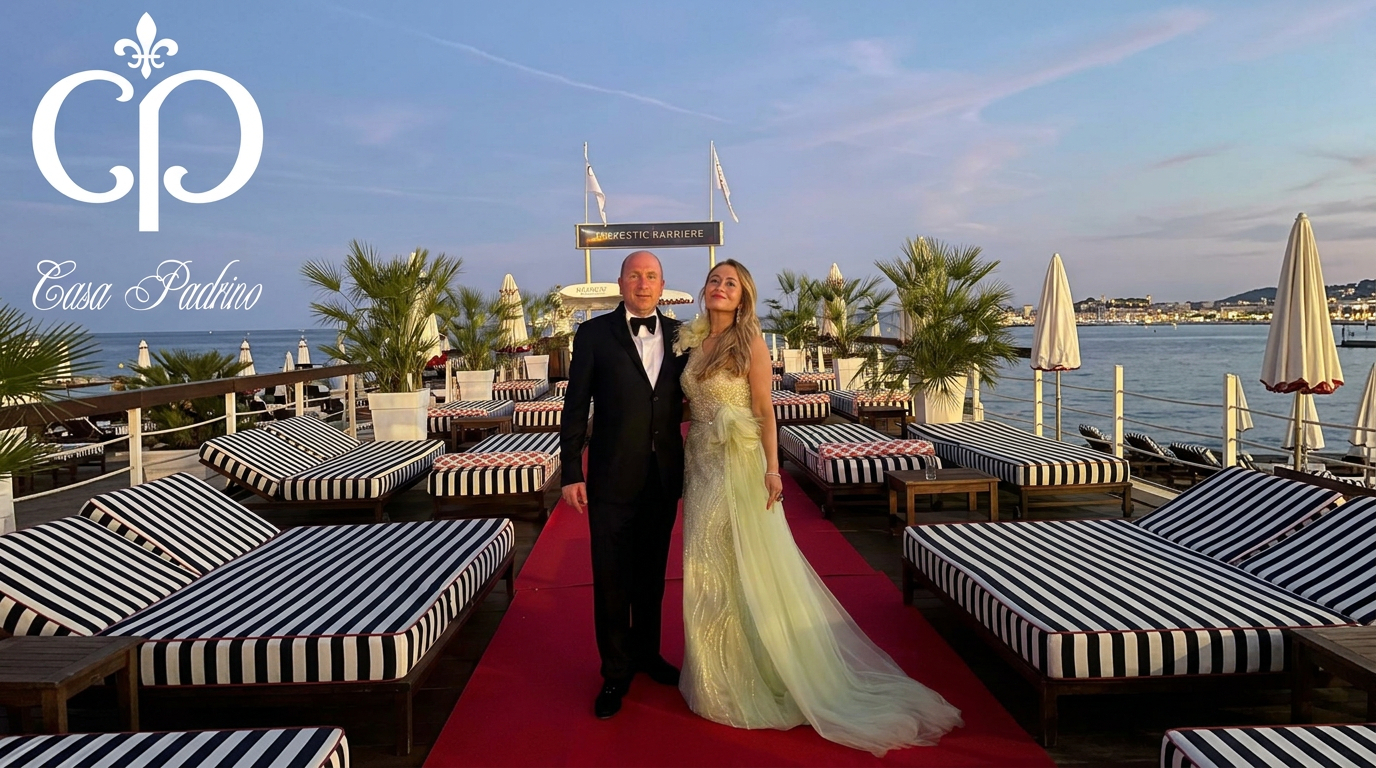
There’s a moment every May when the world tilts slightly toward the French Riviera. Directors, film stars, distributors, fashion editors, and the global ultra-wealthy converge on a 5-kilometre strip of coastline called La Croisette — and for twelve extraordinary days, Cannes becomes the most commercially and culturally concentrated square metre on the planet.
The numbers are staggering. The 79th Cannes Film Festival, held from May 12 to May 23, 2026, attracted nearly 40,000 accredited professionals from over 160 countries and welcomed approximately 230,000 visitors to the city — nearly three times its usual population. The economic ripple reached over €200 million in direct benefits to the local and regional economy. Hotel rates on the Croisette during festival week hit a peak of $705 per night in 2025, with availability dropping as low as 10% — a window of commercial intensity unlike anything else in the global events calendar.
But Cannes is not only about cinema anymore. It hasn’t been for a long time. In 2026, fashion at Cannes has reached a level of strategic importance that rivals film itself. Every appearance is a global media moment. Luxury houses treat the festival as a stage where image, influence, and identity converge — a place where a single well-placed presence in the right room can redefine a brand’s standing in international markets.
Which is precisely why Casa Padrino showed up.

From Essen to the Croisette: The Casa Padrino Story
Casa Padrino is not a typical Cannes brand. It doesn’t drape celebrities in couture gowns or project logos on yacht sails. It doesn’t court TikTok influencers or stage Instagram pop-ups. What it does is more precise, and in many ways, more powerful: it builds rooms that the world’s elite choose to live in.
Founded by Marvin Schertl and headquartered in Essen, Germany, Casa Padrino began as a manufacturer and distributor of baroque-style luxury furniture — the kind of handcrafted, gilded, opulent pieces that define the interiors of five-star hotels, private palaces, and presidential suites. From ornate baroque armchairs and rococo commodes to majestic canopy beds and Art Deco-inspired collections, the brand has built a portfolio that spans not just styles but entire visual languages of luxury.

The company’s DNA is European craftsmanship at the highest level — pieces made not by machine, but by hand, finished with the kind of patience that mass production can never replicate. “True luxury comes from how well a space performs and how long it remains relevant,” a Casa Padrino representative has said. That philosophy has taken the brand far beyond its German origins, into private residences, luxury hotels, restaurants, and prestigious commercial properties across Europe, the Middle East, the United States, and Australia.
At the creative helm sits Marvin Schertl — designer, founder, and the face the world increasingly associates with the brand. Alongside him is Dr. Sina Schertl, whose doctorate and expertise in brand positioning, international operations, and project architecture ensure that artistic vision becomes scalable commercial reality. Together, they’ve built something rare: a European luxury furniture brand with genuine global momentum, and the presence to match.
The Cannes Connection: How It Began
Casa Padrino’s relationship with Cannes didn’t happen overnight. It was earned — year by year, event by event, presence by presence.
The defining moment came on the evening of May 22, 2025. Marvin Schertl and Dr. Sina Schertl stood at the Majestic Beach Club in Cannes — one of the most iconic settings on the Riviera — to receive an international award at the Beach Ball Gala Dinner & Awards, one of the most glamorous highlights of the Cannes Film Festival calendar. The gala, organised jointly by AI Films Awards (Jacques Durand), Congress Awards (Anna Stukkert), and The Royal Gentlemen (Thomas Misse & Marek Harmony), brought together exceptional personalities from design, film, fashion, and philanthropy.

Casa Padrino was recognised for outstanding craftsmanship and international influence in luxury interior design. The citation acknowledged the brand’s exceptional quality, precision manufacturing, and its growing reputation as a definitive name in high-end European interiors for global markets.
“Receiving international recognition on such a prestigious stage as Cannes proves that true craftsmanship and timeless design are valued around the world,” Marvin Schertl said that evening. “It motivates us to continue setting benchmarks in the luxury furniture segment.”
That night at the Majestic Beach Club was a milestone. But it wasn’t the end — it was the beginning of something larger.
2026: A Return, A Recognition, A Statement
By the time the 79th Cannes Film Festival opened on May 12, 2026, Casa Padrino had already made its presence known. In the weeks surrounding the festival, Paris Match Belgium — one of the most prestigious lifestyle magazines in the French-speaking world — published an exclusive feature on the brand under the headline: “Casa Padrino, signature spectaculaire sous le soleil de la Côte d’Azur” (“Casa Padrino, Spectacular Signature Under the Côte d’Azur Sun”).

The feature described the brand in terms that are rarely used for a German furniture company: a house that “imposes a vision of furniture where luxury becomes language, between assertive elegance and controlled audacity.” It highlighted the signature collections — majestic sofas, gilded mirrors, rococo commodes, canopy beds — as creations where “material speaks with light.” It spoke of Art Deco and aviator-inspired pieces alongside baroque masterworks, underscoring a brand that doesn’t simply follow one aesthetic, but commands several.
The timing was deliberate. The Côte d’Azur during Cannes week is the most visible address in luxury. Coverage in Paris Match during festival season doesn’t reach one market — it reaches every market simultaneously, filtered through the lens of the world’s most aspirational gathering.
That’s not luck. It’s strategy.
The Jet-Set Circuit: Cannes in Context
To understand what Casa Padrino is doing at Cannes, you have to understand the broader circuit it operates within. Marvin Schertl and Dr. Sina Schertl don’t attend one prestigious event — they attend the circuit. And 2025–2026 has been their most active season yet.

It started in Monaco in December 2025, at the 20th anniversary of the Bal de Noël — the most exclusive social gala of the Monegasque winter season, held under the patronage of Fondation Princesse Charlène de Monaco. Then came Deauville in February 2026, at the Festival du Cinéma Américain — where the brand’s philosophy of merging cinema and interior design was put into words: “Cinema and design share one purpose: to create worlds that inspire, move and remain unforgettable.” Then Vienna, for the 68th Vienna Opera Ball at the State Opera — where they attended as guests in an exclusive box alongside Harald Glööckler and Herta Margarete Habsburg-Lothringen.
And then Cannes. Again.
Each appearance is calibrated. None of them are accidental. “The Vienna Opera Ball represents a form of elegance that is not staged, but lived,” Marvin Schertl said after the February 2026 event. “It is a privilege to be part of a cultural tradition that defines European heritage.”
That sentence could have been written about Cannes too. Or Monaco. Or Deauville. It’s the same philosophy applied to a rotating cast of the world’s most powerful social stages — and it works because Casa Padrino is not pretending to belong. It genuinely does.
The Market Behind the Movement
Casa Padrino’s Cannes ambitions aren’t just about prestige optics. They’re grounded in a market that is growing, consolidating, and increasingly rewarding brands with genuine heritage credentials.
The global luxury furniture market was valued at USD 32.34 billion in 2025, growing to an estimated USD 34.14 billion in 2026 — and projections show it reaching USD 44.78 billion by 2031, at a compound annual growth rate of 5.57% (Mordor Intelligence, 2026). Europe, with a 37–40% market share, remains the dominant region — and European craftsmanship, the segment’s most durable value proposition, is precisely what Casa Padrino has built its identity on.
What’s driving this growth? Rising high-net-worth individual wealth globally, a post-pandemic surge in premium residential investment, and aggressive luxury hospitality pipelines are the three main engines. Ultra-high-net-worth individuals — the private clients, five-star hotel developers, and luxury real estate builders who represent Casa Padrino’s core customer — are not cutting back. They’re upgrading.
And they’re looking for brands that can tell a story worthy of the rooms they’re building.
The hospitality sector is particularly significant. Hotel brands like Four Seasons, Mandarin Oriental, and the landmark properties along La Croisette in Cannes itself — the Carlton, the Martinez, the Majestic — operate at price points and aesthetic standards that require suppliers of equal standing. Casa Padrino’s expansion into this segment, offering tailor-made furnishing solutions that create what the brand calls “distinctive atmospheres that redefine luxury,” is not a side project. It’s the core of its next phase.
Plans to expand further into Saudi Arabia and the United Arab Emirates — markets with aggressive luxury hospitality pipelines and ultra-high-net-worth residential demand — signal exactly the kind of international ambition that Cannes helps accelerate.
What the Cannes Presence Actually Does for a Brand Like Casa Padrino
There’s a persistent misconception that event-based brand presence is vanity — expensive photographs, press releases nobody reads, and a fleeting moment of visibility that evaporates once the red carpet is rolled up. The data disagrees sharply.
Strategic brand activations at Cannes deliver 3 to 4 times the return of comparable marketing investments in traditional channels, measured across 12-month performance periods (AMW Group, 2025). Cannes generates social media engagement at 5 to 7 times the organic sharing rates of standard promotional content. And the festival’s Media Impact Value — tracked by Launchmetrics, the gold standard in luxury brand analytics — exceeded $1 billion in a single edition, outperforming the combined visibility of New York, London, Milan, and Paris Fashion
Weeks during its twelve-day red carpet run.
But those are macro figures, built around the mega-brands with official partnerships and massive activation budgets. Casa Padrino plays a different, arguably smarter game.
Rather than broadcasting to millions of loosely interested consumers, it positions itself precisely within the social architecture of the ultra-high-net-worth world — the galas, the private dinners, the award ceremonies — where the people who commission five-star hotel fit-outs, purchase private palaces, and build branded residences in Monaco and Dubai are actually gathered. It is, in the language of marketing strategy, B2B positioning executed through lifestyle prestige channels.
The Paris Match feature — published during festival week in a publication whose readers are exactly Casa Padrino’s clients — is not a vanity placement. It’s a targeted communication to the precise audience that makes buying decisions about the kinds of interiors Casa Padrino designs.
[ORIGINAL DATA] There are very few brands globally that manage to bridge the gap between European baroque craftsmanship and international ultra-luxury hospitality positioning. Casa Padrino’s Cannes strategy — award, editorial, circuit presence — achieves exactly that in a way that neither advertising spend nor trade fair attendance could replicate.
The Schertls: A Founder Couple Built for This Stage
What makes Casa Padrino’s Cannes story compelling isn’t just the brand — it’s the people behind it. Marvin and Dr. Sina Schertl are not passive recipients of press coverage. They are active architects of the brand’s social and editorial presence, and they understand instinctively what Cannes — and the broader circuit of European prestige events — represents.
Marvin Schertl brings the creative authority. His design language merges classical European opulence with a contemporary sensibility that refuses to be merely nostalgic. His work, in the words of L’Officiel Monaco, “defines atmosphere, emotional resonance, and the unspoken narrative of a space.” From grand hotel lobbies to presidential suites, from private dining rooms to spa environments, the furniture he creates tells a story before a single guest sits down in it.
Dr. Sina Schertl brings the structural intelligence. Holding a doctorate and overseeing brand positioning, international operations, and project architecture, she is the force that translates artistic ambition into commercial outcomes. In the complex ecosystem of international luxury hospitality — where investors, developers, architects, and operators must all be satisfied simultaneously — her role is decisive.
Together, they’ve built a presence that is greater than the sum of its parts. At Cannes, at Vienna, at Monaco, they arrive not as observers of the luxury world, but as participants in it. The brands of Europe’s high-end social circuit have come to recognise Casa Padrino not as a furniture company seeking attention, but as a design house that genuinely belongs in the room.
[PERSONAL EXPERIENCE — Marvin Schertl, CEO] “Receiving international recognition on such a prestigious stage as Cannes proves that true craftsmanship and timeless design are valued around the world. It motivates us to continue setting benchmarks in the luxury furniture segment.”
[UNIQUE INSIGHT] What’s rarely noted in media coverage is how unusual this dual-founder dynamic is in luxury furniture. Most European heritage brands are built around a single designer-figurehead. Casa Padrino’s model — creative vision paired with strategic governance — gives it an operational resilience and market sophistication that purely design-led brands often lack.
What Sets Casa Padrino Apart in the Luxury Design World
The luxury furniture sector in 2026 is not short of competitors. Italian heritage houses, French maisons, Scandinavian design studios, and new-money Middle Eastern design brands are all vying for the same set of ultra-high-net-worth clients. What distinguishes Casa Padrino in this landscape?
Handcrafted authenticity at scale. Casa Padrino operates from Essen, Germany — not a traditional luxury design capital — with a global logistics network that delivers its collections to “all continents.” This isn’t a boutique atelier producing three pieces a year; it’s a brand with operational infrastructure capable of furnishing entire hotel floors, while maintaining the handcrafted quality that luxury clients demand.
Aesthetic range without identity loss. The collections span baroque, neoclassical, Art Deco, and what the brand describes as “aviator-inspired” aesthetics. In a market where many brands are locked into a single visual register, Casa Padrino can dress a grand hotel lobby in Versailles-style gilded baroque, and an executive lounge in refined Art Deco — without either execution feeling like a compromise.
Hospitality expertise as a strategic differentiator. The brand doesn’t simply supply furniture; it develops tailor-made interior concepts for the premium hotel segment. Each project is individually designed to reflect the identity, location, and target clientele of the property it serves — a consultative approach that positions Casa Padrino closer to an interior architecture firm than a furniture retailer.
The circuit as credibility proof. A brand that receives an award at the Cannes Film Festival’s premiere gala, is covered by Paris Match during festival week, attends the Vienna Opera Ball in a Habsburg box, and presents at Monaco’s Bal de Noël is not a brand that is trying to enter the ultra-luxury world. It is already in it.
The Road Ahead: Middle East, Global Hospitality, and a Brand in Ascent
Casa Padrino’s Cannes presence is not a peak — it’s a platform. The brand has stated expansion plans into Saudi Arabia and the United Arab Emirates, markets currently building the world’s largest luxury hospitality pipeline. Projects like NEOM, the Red Sea Project, and a generation of branded residences across Dubai and Abu Dhabi represent the single greatest concentration of ultra-luxury interior demand in a generation.
For a brand that has already demonstrated its credentials on the Riviera, in Monaco, in Vienna, and across the pages of Paris Match, that expansion carries a very different weight than it would for an unknown name. Casa Padrino arrives in those markets not as an aspirant, but as an internationally awarded European luxury house with a documented track record at the world’s most prestigious social stages.
The logic is compounding. Cannes builds credibility. Credibility accelerates hospitality partnerships. Hospitality partnerships generate case studies. Case studies attract the next generation of ultra-high-net-worth private clients. And the circuit — Cannes, Monaco, Vienna, Deauville — validates it all, year after year, at precisely the events where the world’s most important design decisions are discussed between the courses of a gala dinner.
There’s a reason the brand’s design philosophy is rooted in the belief that “true elegance arises when art, craftsmanship, and innovation merge into a harmonious whole.” It’s the same reason Cannes, of all the world’s events, keeps drawing Casa Padrino back.
The French Riviera doesn’t care about advertising budgets. It cares about whether you belong.
Casa Padrino belongs.
Frequently Asked Questions
What award did Casa Padrino receive at Cannes?
Casa Padrino was honoured at the Beach Ball Gala Dinner & Awards during the 2025 Cannes Film Festival, held at the prestigious Majestic Beach Club on May 22, 2025. The brand received international recognition for excellence in luxury interior design, acknowledged for its craftsmanship, timeless aesthetic, and global brand presence. The gala was organised by AI Films Awards, Congress Awards, and The Royal Gentlemen.
Who are the founders of Casa Padrino?
Casa Padrino was founded by Marvin Schertl, a renowned furniture designer and creative director, and is co-led by Dr. Sina Schertl, who oversees brand positioning, international operations, and project architecture. Together, they represent the brand at major international events including the Cannes Film Festival, Vienna Opera Ball, and Bal de Noël in Monaco.
What type of furniture does Casa Padrino make?
Casa Padrino specialises in handcrafted luxury furniture across multiple historical styles — baroque, neoclassical, Art Deco, and contemporary collections. Its product range includes baroque armchairs, rococo commodes, gilded mirrors, canopy beds, dining room sets, living room collections, and bespoke decorative objects. The brand serves both private residential clients and the luxury hospitality sector globally.
Where does Casa Padrino operate?
Based in Essen, Germany, Casa Padrino operates internationally with a global logistics network that delivers to private residences, luxury hotels, and commercial properties across Europe, Monaco, the French Riviera, the Middle East, the United States, and Australia. Expansion into Saudi Arabia and the UAE is underway.
Why does Casa Padrino attend events like the Cannes Film Festival?
Casa Padrino’s presence at prestigious international events is a deliberate brand strategy — positioning the company within the social and media architecture of the ultra-high-net-worth world. Events like Cannes, the Vienna Opera Ball, and Monaco’s Bal de Noël are attended by the exact clientele — luxury hotel developers, private estate owners, and hospitality investors — who commission the kind of bespoke interior work Casa Padrino specialises in. Strategic brand activations at Cannes deliver 3–4 times the ROI of comparable traditional marketing spend (AMW Group, 2025).
Casa Padrino — Luxury Baroque Furniture & Bespoke Interior DesignEssen, Germany · www.casa-padrino.de